Service / Website redesign
Website redesign and migration
Most redesigns are triggered by something specific: a rebrand, a funding round, a merger, a new head of marketing, or a site so hard to edit that nobody bothers. Whatever the reason, a redesign should keep what is working on the current site. We start by finding out what that is.
Audit before design
We review analytics, search data and the current page inventory to see which pages bring visitors and enquiries, which are dead weight, and where people get lost. Old research news, outdated team pages and orphaned PDFs are common on Cambridge sites that have grown for a decade. Some content should move, some should merge and some should go.
Protecting search traffic
The quickest way to lose visibility is to change every URL and forget the redirects. We build a full redirect map from old addresses to new ones, test it before launch and monitor Search Console afterwards for errors.
Phased or all at once
Larger organisations sometimes prefer to redesign in phases, starting with the homepage and key landing pages. Smaller sites usually move in one go. We plan whichever approach carries less risk for you.
Why organisations redesign
Redesigns are usually triggered by something specific. A Cambridge spin-out closes a funding round and the holding page no longer fits. A company on the Cambridge Science Park changes its focus and its site still describes the old one. A firm merges, rebrands or hires a new marketing lead. A college office inherits a site that only one person knows how to edit. Or the site has simply grown for a decade until nobody can find anything.
Whatever the reason, a redesign should keep what is working. Most sites have a handful of pages that bring in most of the visits and enquiries. Losing them in a redesign is the most expensive mistake a web agency can make, and it is avoidable.
What is included, step by step
- AuditWe review analytics, Search Console data and the full page inventory. For each page we note traffic, search visibility, links pointing to it and whether it still serves a purpose.
- Content planPages are marked keep, merge, rewrite or retire. Old research news, outdated team pages and orphaned PDFs are common on Cambridge sites and are handled deliberately rather than copied across.
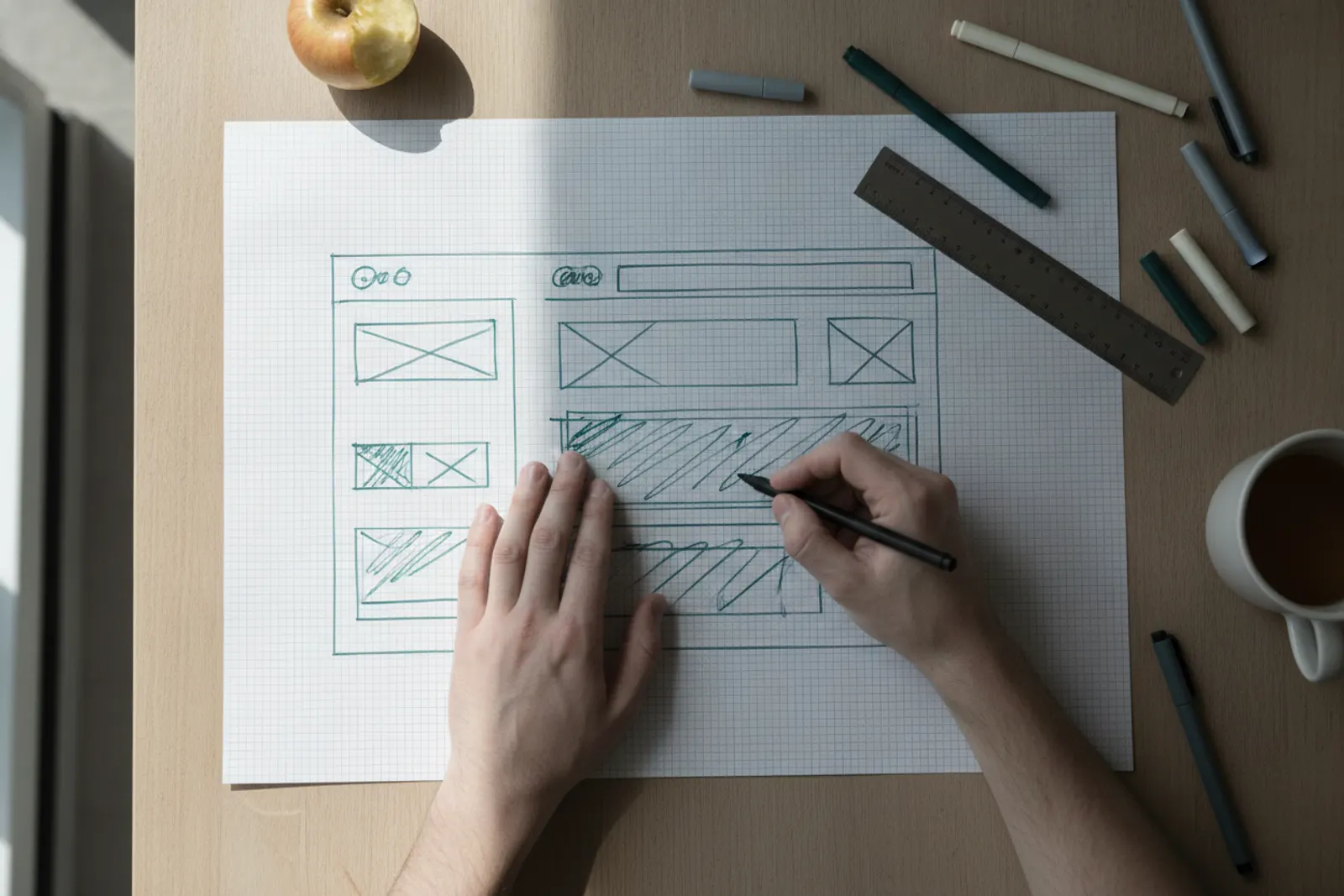
- New structure and designA new page map, wireframes and visual design, informed by what the audit shows visitors actually use.
- Build and migrationThe new site is built on staging, and content is moved, cleaned and restructured.
- Redirect mapEvery old URL with traffic or links is mapped to its closest new equivalent. We test the full list before launch.
- Launch and monitoringWe launch, submit the new sitemap and monitor Search Console, analytics and error logs for 30 days, fixing problems as they appear.
Timescales
| Site | Typical length |
|---|---|
| Small site, under 30 pages | 6 to 10 weeks |
| Medium site with news, team and services | 10 to 16 weeks |
| Large site with hundreds of pages or documents | 4 to 6 months, often phased |
What drives the cost
- Size of the old site and how much content needs auditing and moving.
- Content work: rewriting, merging and replacing images.
- Platform change: moving between systems takes more than redesigning on the same one.
- Branding changes happening alongside the redesign.
- Integrations that need rebuilding on the new site.
Common redesign mistakes
- Changing every URL without redirects. The fastest way to lose search visibility and break links from other sites.
- Copying everything across. Migrating outdated content carries old problems into the new site.
- Deleting pages that quietly perform. An old blog post may bring in a steady stream of visitors. Check before removing.
- Redesigning the look but not the structure. A new coat of paint on a confusing menu is still a confusing menu.
- Launching on a Friday. Launch early in the week, when the team is around to fix problems.
- No baseline. Without measurements from the old site, you cannot tell whether the new one is better.
How we measure success
We compare the new site with the baseline over the first three months: organic search traffic to key pages, enquiries or conversions, crawl errors and page speed. We expect some short-term movement in search after any migration, and we watch for redirect gaps and errors so they are fixed quickly. We also check with your team that editing the new site is genuinely easier, because that is often the reason for the redesign in the first place.
Redesigns for Cambridge organisations
Older Cambridge websites often carry years of research news, events and documents, plus pages built for audiences that have changed. A good redesign sorts that out with a clear strategy instead of a fresh template. Whether you are a small firm in Cambridgeshire with a ten-page site or a science company with hundreds of pages and publications, the method is the same: measure, plan, rebuild carefully and protect what already works.
What a content audit looks like
The audit is a spreadsheet of every page on your current site, with the data that matters beside it: visits over the last year, search clicks, the queries each page appears for, links from other sites and the date it was last updated. We add a recommendation for each row and a short reason. On a typical older site, a small group of pages earns most of the attention, a large group earns almost none and a few pages are actively unhelpful because they are out of date.
We go through the recommendations with you rather than deciding alone, because you know things the data does not: a page that matters for a regulator, a document a key partner relies on, a service you are about to stop offering. The agreed audit becomes the migration plan and the basis for the redirect map.
Redesign alongside a rebrand
If your branding is changing at the same time, we coordinate with your brand designer or agency so the website design system grows from the new identity rather than being bolted onto it. We check new colours and fonts for screen use early, because brand palettes designed for print sometimes fail contrast requirements online.
Keeping the old site running
While the new site is built, your current one stays live. We agree a content freeze date shortly before launch so nothing published on the old site is lost, and we keep a full archive copy of the old site afterwards in case anyone needs to check what a page used to say. For organisations that publish frequently, such as research groups, colleges and companies with active newsrooms, we plan a short window in which new items are added to both sites, so news and vacancies never pause.
Launch day itself is planned in detail: who switches the domain, who checks forms, who tests the redirects and who watches the error logs. A good launch is uneventful, which is exactly the aim.
Questions
Website redesign: common questions
Will we lose our Google rankings?
A careful migration with complete redirects should not cause lasting losses. Some short-term movement is normal; we monitor and fix issues after launch.
Can you reuse our current content?
Yes, where it is accurate and useful. The audit shows which pages to keep, merge, rewrite or retire.
Do you write copy?
We edit and restructure existing copy and write straightforward page copy. For technical science content we work with your subject experts.
Can we redesign in phases?
Yes. Larger organisations often start with the homepage and key landing pages. We plan whichever approach carries less risk.
Can we keep our current platform?
Sometimes. If the platform is sound, a redesign can keep it. If it is the cause of the problems, we will explain why a move is worth it.
Related services
Website design
Website design for Cambridge businesses, labs and spin-outs. Clear structure, careful typography and pages built around what your visitors need to find.
SEO
Technical and local SEO for Cambridge businesses: site structure, page speed, structured data and content that answers what people search for.
Web development
Bespoke web development for Cambridge companies: static and headless builds, integrations, and sites that load quickly on any connection.
Next step
Planning a new website?
Tell us what the site needs to do and who it is for. We will reply with questions, a rough approach and an honest view of cost and timing.
Start a conversation