Service / Website design
Website design for Cambridge organisations
Good website design starts with a plain question: who arrives on this page, and what do they need to do next? We design sites for Cambridge companies that have outgrown a template, research groups that need to explain hard ideas to non-specialists, and local firms that simply want enquiries from people nearby.
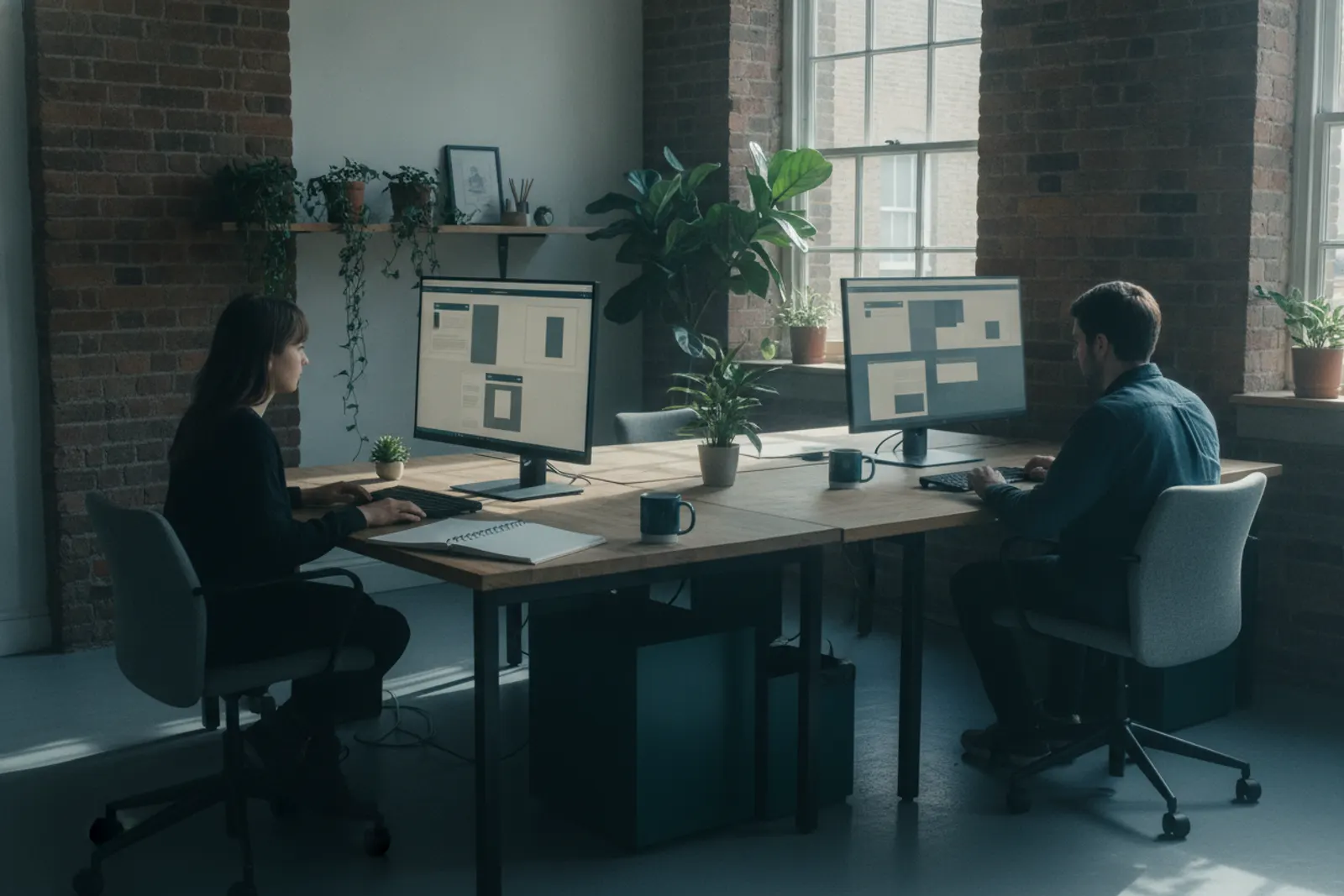
How we approach design
We start with content and structure rather than a moodboard. Before any visual work we map the pages, the questions each one answers and the action we want a visitor to take. That map becomes the wireframe, and the wireframe becomes the design. It is slower in week one and much faster in week six, because nobody is arguing about colours while the real problem (a confusing menu, a missing pricing page, a contact form buried three clicks deep) goes unsolved.
Design systems, not one-off pages
Every site we design is built from a small set of reusable components: headings, cards, tables, calls to action, forms. That keeps pages consistent when your team adds new content in two years, and it keeps the site fast. For organisations around the science parks that publish a lot of technical material, we also design proper patterns for data tables, figure captions, publication lists and team pages.
Designed for the people who actually visit
A Cambridge website often has several audiences at once. A spin-out might be speaking to investors, prospective hires and pharma partners on the same homepage. A guesthouse near the colleges is talking to tourists on phones and conference organisers on desktops. We design separate routes for each group so nobody has to wade through content meant for someone else.
Who this is for in Cambridge
Most people who hire a web designer in Cambridge fall into one of a few groups. There are technology and life science companies, often on or near the Cambridge Science Park (founded by Trinity College in 1970) or the Cambridge Biomedical Campus, who need to explain specialist work to investors, partners and recruits. There are professional firms, clinics and consultancies across Cambridgeshire whose clients choose them partly on how credible they look online. There are independent shops, cafés and makers, from Mill Road to the market towns, who need to be found by people nearby. And there are colleges, charities and public bodies with many editors and accessibility duties.
The design problem is different for each. A spin-out homepage might need to speak to three audiences at once. A guesthouse needs a phone visitor to see rooms and availability in seconds. A consultancy needs a portfolio of work that shows judgement, not just logos. Our website design process is built to find out which problem you actually have before anyone opens a design tool.
What is included, step by step
- DiscoveryA workshop with the people who run the business and, where possible, a few conversations with customers. We review your current site, analytics and search data, and look at competitors so we know what visitors will compare you with.
- Content map and strategyA list of every page, the question each answers, who it is for and the action we want visitors to take. This is where digital strategy becomes concrete. It is a short document you can read in ten minutes.
- WireframesGrey-box layouts of each page type, built in the browser so you can click through them on your phone. We test the main journeys, such as finding a service and getting in touch, before any visual design.
- Visual designTypography, colour, imagery and detail applied to the wireframes as a component system. We design key pages in full and show how the components combine on the rest.
- Design QA and handoverEvery component is checked at phone, tablet and desktop widths, and against WCAG 2.2 AA for contrast and focus states. Design files and short usage guidelines are handed over to you and to whoever builds the site, whether that is our development team or yours.
How long it takes
| Type of project | Typical length | What sets the pace |
|---|---|---|
| Small site, five to ten pages | 4 to 8 weeks including build | How quickly content and feedback arrive |
| Company site with several audiences | 8 to 14 weeks | Number of page types and sign-off stakeholders |
| Larger organisation or redesign with migration | 3 to 6 months | Content audit, approvals and integrations |
The schedule is rarely held up by design work. It is held up by content and decisions. We plan both from week one and tell you exactly what we need and when.
What drives the cost
Rather than quote a figure that might not apply, here is what moves the price of web design in Cambridge, as anywhere:
- Number of distinct page types. Twenty service pages sharing one template cost less than ten pages that each need a unique layout.
- Content help. Editing and restructuring your copy takes time; writing technical pages from scratch with your scientists takes more.
- Branding work. Using an established brand is quicker than developing or refreshing one alongside the site.
- Audiences. Each distinct audience usually needs its own route through the site.
- Stakeholders. More people signing off means more meetings and more rounds.
After discovery we give you a written range and explain which of these factors put you where you are, so you can trade scope against budget knowingly.
Common mistakes we help clients avoid
- Designing the homepage first. The homepage is a summary of the site. Designing it before the inner pages are understood leads to a front page that promises things the rest of the site does not deliver.
- Choosing a design agency by visual style alone. A striking portfolio says little about whether the agency can structure content for a technical audience or a busy mobile visitor.
- Writing for yourselves. Internal names for products and teams creep into menus. Visitors do not know what your "Platform 2" or "Translational Hub" is.
- Too many calls to action. A page that asks visitors to subscribe, download, book, follow and enquire usually gets none of them.
- Treating mobile as an afterthought. For local businesses and hospitality, most visits are on phones. We design phone layouts alongside desktop, not after.
- Ignoring the editor. If a design is hard for your team to keep up to date, it will drift out of date within a year.
How we measure whether the design works
A good-looking site that does not change anything is a poor investment. Before launch we agree a small number of measures that relate to your goals, such as enquiries through the contact form, clicks to book, applications started or time spent on key explanatory pages. We set up analytics to track them, respecting your privacy approach.
We also run simple usability checks before launch: asking people who match your audience to complete a task, such as finding a service or a vacancy, and watching where they hesitate. After launch, we review the numbers at four and twelve weeks and recommend small changes. Often the most useful improvements are tiny: a clearer label, a shorter form, a missing link from a popular page.
Why a Cambridge web design studio
You can hire a web agency anywhere. A Cambridge web design studio understands the local context: how a biotech company on the Biomedical Campus talks to investors, why a college conference office has a dozen editors, what visitors arriving at Cambridge North need from a hotel site, and how competitive local search is for small trades across Cambridgeshire. We are happy to meet in person for workshops, and the rest of the project runs on clear written updates so your team always knows where things stand.
Questions
Website design: common questions
Do you use templates?
No. Each site is designed from a content map for your organisation. We reuse proven patterns, such as a tested form layout, but not whole page designs.
Can you work with our existing branding?
Yes. Most clients already have a logo and colours. If they need adjusting for screens, for example to meet contrast requirements, we suggest specific changes and explain why.
How long does website design take?
Most small business sites take four to eight weeks from kick-off to launch. Larger sites with many page types or several audiences take longer, and we set a schedule after discovery.
How many design revisions do we get?
We agree rounds at the start, usually two on wireframes and two on visual design. Because structure is settled before visuals, late changes are rare.
Do we need to supply the copy?
Usually you supply the expertise and a first draft, and we edit and structure it. For simple pages we can write copy from a short interview.
Related services
Web development
Bespoke web development for Cambridge companies: static and headless builds, integrations, and sites that load quickly on any connection.
Website redesign
Website redesign and migration for Cambridge organisations. We keep what works, fix what does not, and protect your search traffic during the move.
Accessibility and speed
Accessibility audits to WCAG 2.2 and page speed improvements for Cambridge organisations, including public sector and research bodies.
Next step
Planning a new website?
Tell us what the site needs to do and who it is for. We will reply with questions, a rough approach and an honest view of cost and timing.
Start a conversation